For 43-year-old Dahir Gedi Bahdon, farming underpins his family's life. A father of seven living in Wabari Kebele, Afdem Woreda, Dahir has depended on subsistence farming to feed his family and support his children. However, recurrent drought and changing climatic conditions have made farming increasingly difficult, leaving the family struggling to produce enough food, save money, and meet essential needs.
“There were times when we could not eat three times a day. Farming was our only way of life, but persistent droughts made it difficult to produce enough food for my family.”
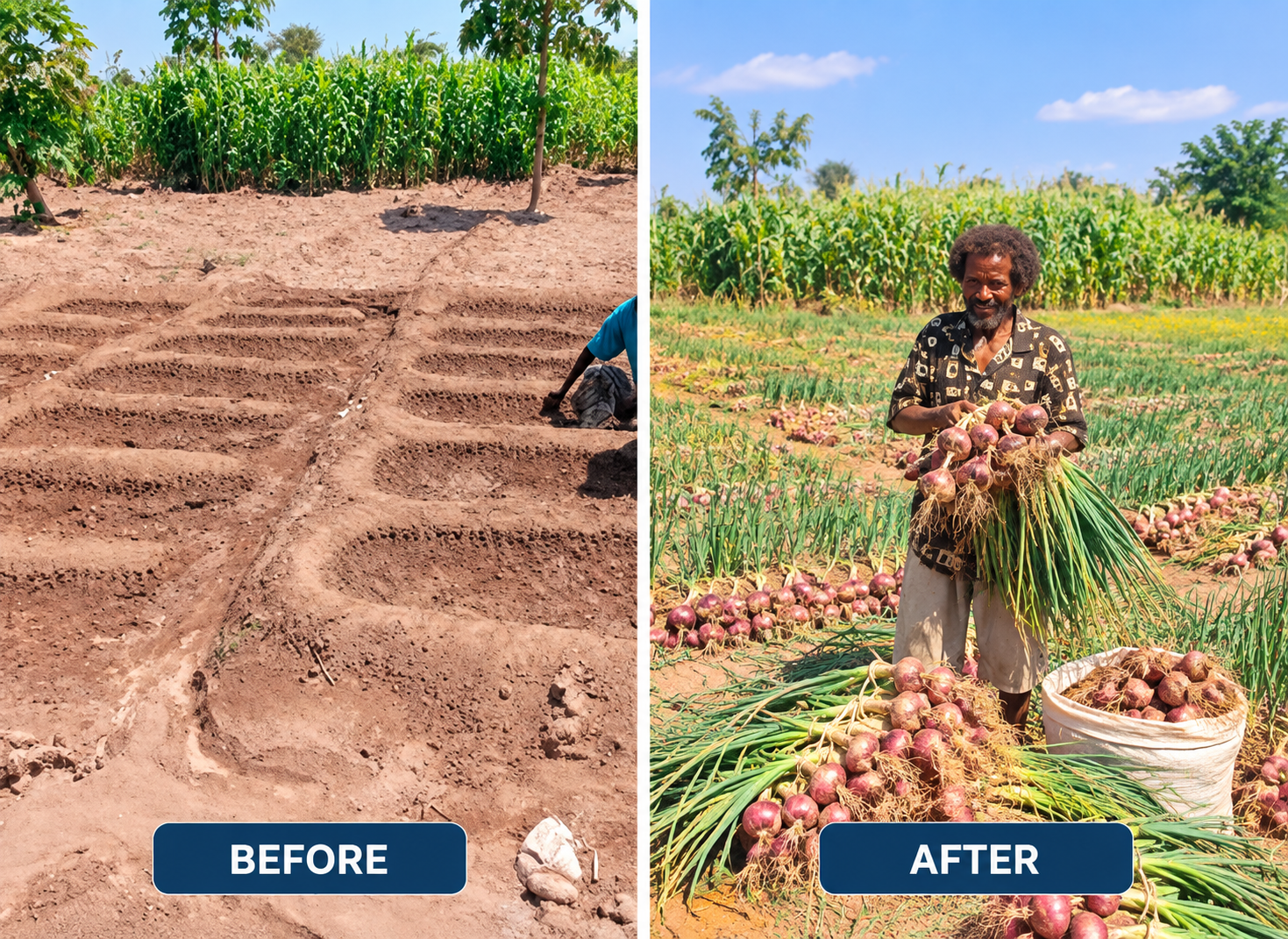
Through its food security and livelihood support, Aid for Integrated Development (AID) provided Dahir with onion, hot pepper, and tomato seeds, along with essential farming tools, including a hoe, pick, and rake. AID-trained agricultural extension workers also provided technical guidance to help him restore cultivation on his land.
The support has begun to make a difference. Dahir's farm is now producing onions, tomatoes, and hot peppers, providing fresh and nutritious food for his family and improving the variety of their meals. With the full harvest still ahead, he is hopeful that the increased production will help his family strengthen food security, generate income, build savings, and better support his children's education.
“AID’s support has brought us hope. The seeds and tools they provided helped me restart farming. We are now eating vegetables from our garden, which has greatly improved our meals. I am optimistic that the full harvest will allow us to save money, improve our food security, and better support my children’s education and our future.” Dahir Gedi Bahdon
Dahir's experience shows how targeted agricultural inputs and practical technical support can help drought-affected households restore livelihoods, strengthen food security, and move toward greater resilience and self-reliance.