When drought deepens, access to safe water becomes an urgent priority. AID combines emergency water assistance with longer-term investments in sustainable water infrastructure, helping communities maintain reliable access to safe water beyond the immediate crisis.
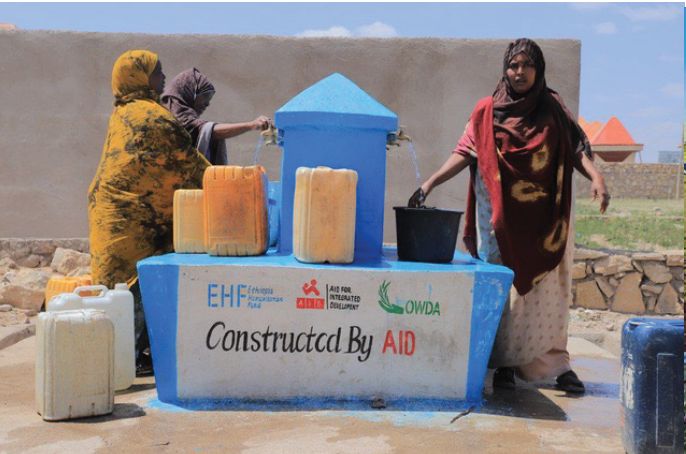
AID assesses local needs and develops appropriate solutions, including the rehabilitation of boreholes, construction of elevated water tanks and birkas, solar-powered water supply systems, and public water points. To date, AID has supported 13 boreholes, 7 elevated water tanks, 12 birkas, 6 solar water supply schemes, and 18 public water points.
Alongside water infrastructure, AID promotes safe sanitation and hygiene practices. The organization has reached 425,000 people through hygiene and sanitation promotion campaigns and constructed 75 emergency latrine blocks, helping communities reduce health risks and protect water quality.
AID's WASH approach combines immediate humanitarian assistance with sustainable, community-based solutions that strengthen ownership and resilience. The goal is not only to provide water during a crisis, but to support reliable and sustainable water systems that communities can maintain over time.